MUSIC
►
Beaks►
Cat Gadget►
Deta►
Dexpleen►
DJ Soare►
DJ Vulverine►
Glut►
Grrrls Chor►
Katcha B►
Lain Iwakura►
Lessie►
Nami►
Portia►
Sarah Dawy►
Scheidenkleister►
Small Souki►
Top_SDISCOURSE
►
Sonja Eismann & Susanne Sackl-SharifPERFORMANCE
►
Nina Chabek►
Mahtab MiandehiWORKSHOP
►
Bildet Banden!►
Neurodivergentes Netzwerktreffen►
⚡️SPEED-SKETCHING⚡️►
Vogue Femme Crashcourse►
What is consent?INSTALLATION
►
Musikmaschine►
TRYVOGAMUSIC
Beaks
poetic solo concert

Bild: © Fabi Rettenbacher
Beaks is the music project by Anna Francesca, who has been writing for years but only recently found a way of sharing her text through songs. Coming from poetry, she plays words like an instrument, embedded into a sound that’s minimalistic and effortless.
Her lyrics are introspective snapshots of life – perhaps even dream sequences – reflecting the essence of the human condition. Oscillating between reality and a dizzy daydream, Beaks is sleepwalking with open eyes. This becomes evident in her single „Dirty Girls,“ that ends with the words: „How do dreams work? Will I wake up if I die?“
Auftritt:
Zeit:
22:00
Location:
Main Stage Indoors
Cat Gadget
Italo sounds, driving EBM beats, spherical synth sounds
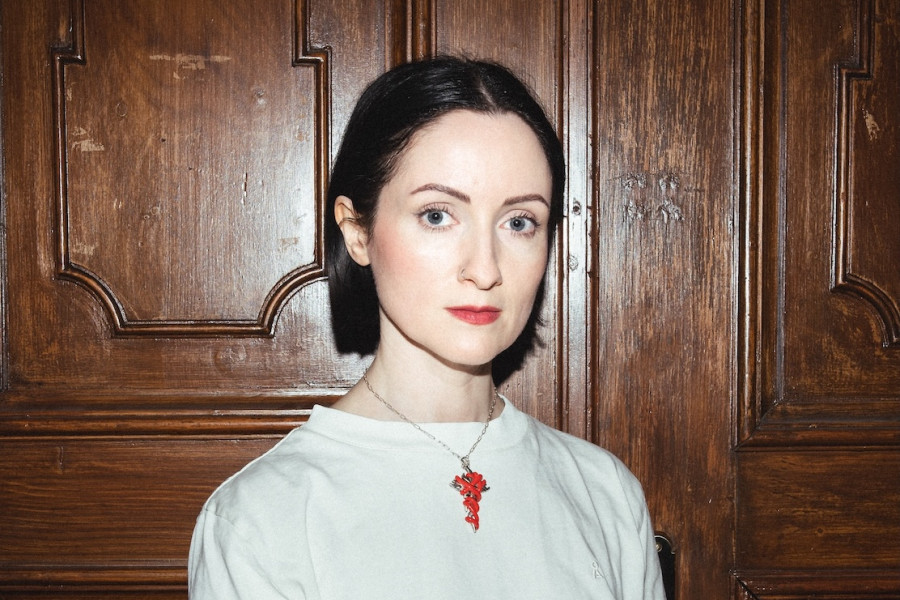
Bild: © Christian Lach
Cat Gadget is a vinyl enthusiast and DJ based in Graz, Austria. Her sets channel a sense of old-school nostalgia. Whilst exploring electronic music of the past decades, she seamlessly fuses EBM, Electro, Industrial, as well as obscure Italo Disco, Wave and New Beat.
Since 2018 she is part of Grrrls.at, a culture club and collective focused on supporting FINTA+ artist. With Grrrls.at she has organized and hosted the event series “Grrrls* Club” with the main focus on promoting local FINTA+ artists. Together with her colleague Užas! she now invites to “Grufti Groove”, an event series for everybody who loves dark sounds, since 2024.
Auftritt:
Zeit:
t.b.a. -
Location: t.b.a.
Grrrls Chor
The big summer concert!
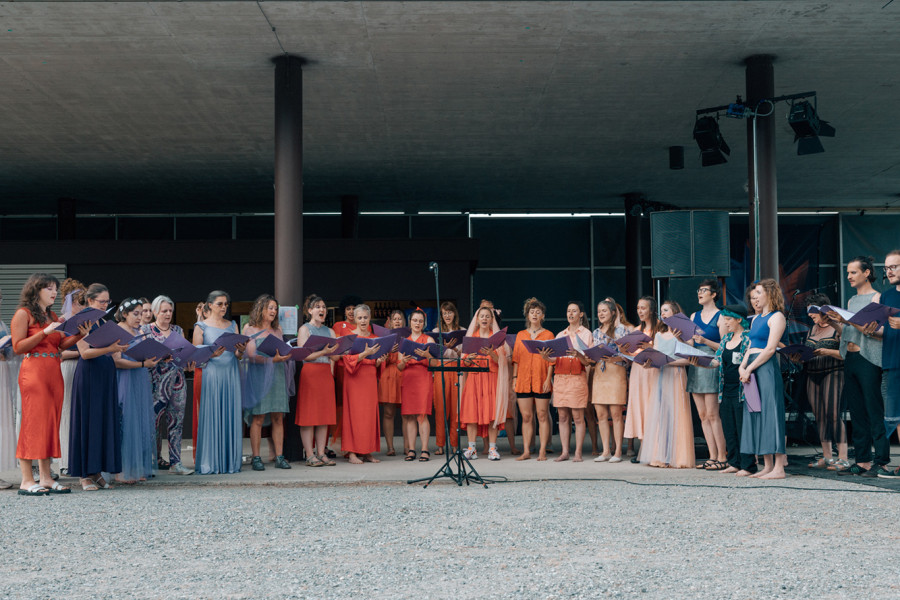
Bild: © Lena Baloch
The association's own GRRRLS CHOR is a queer-feminist choir. The concept, organisation, musical direction, and composition/arrangements are all handled by FINTA* – but anyone with queer-feminist beliefs is welcome to join in! At the STERRRN fest 2026, the choir will showcase its full sonic power – loud, polyphonic, and empowering.
In the tradition of STERRRN, Grrrls Chor will perform their summer concert of new and old compositions at the festival.For the 5th anniversary of the event, we are happy to announce that extra special guest artists will join the performance. Come & celebrate with us - 5 years of Grrrls Chor Live, 5 years of STERRRN!
CLITSTARS
Miss Clit and Eric BigClit a.k.a. Clitstars placed 3rd at the FM4 Protest Song Contest 2026 with their song “Our Bodies, Our Choice.”We support this message - in our hearts and on the stage of SF26. Their lyrics won Grrrls.at‘s „Protestsong Lyric Contest““. SF26 will kickstart the subsequent queerfeminist cooperation deluxe of Choir x Clitstars with the joint performance of their original song.
DUST CITY DANCERS
Missed the first ever halftime show of the choir? No need to be sad: The beloved & fantastical cheerleading and fun dance group Dust City Dancers will join the SF26 Performance for a joyful reunion 🔥

► Grrrls Chor Website
► Grrrls.at Instagram
► Dust City Dancers Instagram
► Miss Clit Instagram
► Eric BigClit Instagram
Auftritt:
Zeit:
17:00
Location:
Main Stage Outdoor
Deta
Contrasts & Movement

Bild: © Björn B.
Deta plays exclusively on vinyl and is open to all genres. For the Sterrrn pre-party, she brings a varied mix of disco, house and electro, focussing on rhythmic structures and percussion - danceable and rich in detail.
Auftritt:
Zeit:
22:30
Location:
Pre-Party Kombüse Graz
Dexpleen
unapologetic anthems of love and longing from Viennas

Bild: © Diana Mühlberger
Vienna-born Dexpleen (they/them), at 22, channels a lifetime of emotion into music. The producer, songwriter, and multi-instrumentalist has been tinkering with the ivories since the age of six and refuses to be confined by genre labels.
Born out of an overwhelming sense of being misunderstood, their music serves as a vessel for emotions often too complex for words. It defies categorization, effortlessly weaving elements of indiepop, folk rock, and electro pop into a tapestry of sonic storytelling.
With a keen desire to fill the void of representation, Dexpleen crafts queer love songs – anthems of love and longing that resonate with authenticity and unapologetic pride – offering a safe haven within their music for all who seek refuge.
In these melodies, listeners find not only an escape but also a sense of validation – a confirmation that they are seen, heard, and understood. Dexpleen emerges as a beacon of authenticity and hope, inviting us into a world where individuality is celebrated and acceptance reigns supreme.
Auftritt:
Zeit:
19:00
Location:
Main Stage Indoors
Glut
GLUT ARE READY TO BURN DOWN THE HOUSE
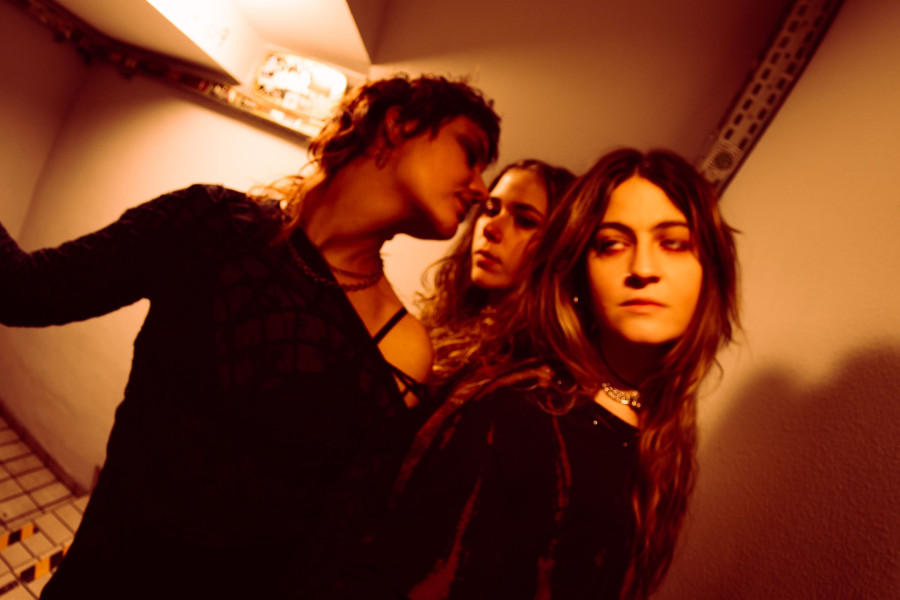
Bild: © Mona Werner
GLUT are a band from Vienna / Linz . Their songs are epics about escape, rebellion, in justice, and personal growth.
Two friends are living their dream and claiming the space they deserve. With catchy rocksongs, psychedelic influences, and plenty of noise on stage, they’ve already won over audiences during their more than 20 concerts in austria.
Together with their bassist, the rock trio is complete. Heavy drums, a powerful guitar, a strong voice , and energetic bass riffs set the stage ablaze . The band inspires courage and creates space for imperfection. Their sense of empowerment is as electrifying as a fire ready to ignite .

Auftritt:
Zeit:
21:00
Location:
Main Stage Indoors
DJ Soare
liquid-like melodies

Bild: © @vyzaruu
Just a girl who loves making people dance to her favorite music. Body grounded – head in the sky: she makes the speakers speak to you.
At STERRRN, the upcoming artist based in Graz will play liquid-like melodies ranging from 150 to 175 bpm. Let the bass take you on a meditative journey of connection – from your soul to the dancefloor.
Auftritt:
Zeit:
17:45
Location:
Mond DJ Pult
DJ Vulverine
Funky, Groovy, Disco, Vinyl

Bild: © privat
With a mix of funk and groove in her vinyl collection, DJ Vulverine invites you to dance and listen. Guided by emotion and authenticity, long-forgotten records come together anew in a unique setting. Bring your dormant longings and dance them away!
Auftritt:
Zeit:
13:00
Location:
Mond DJ Pult
Katcha B
you only live once
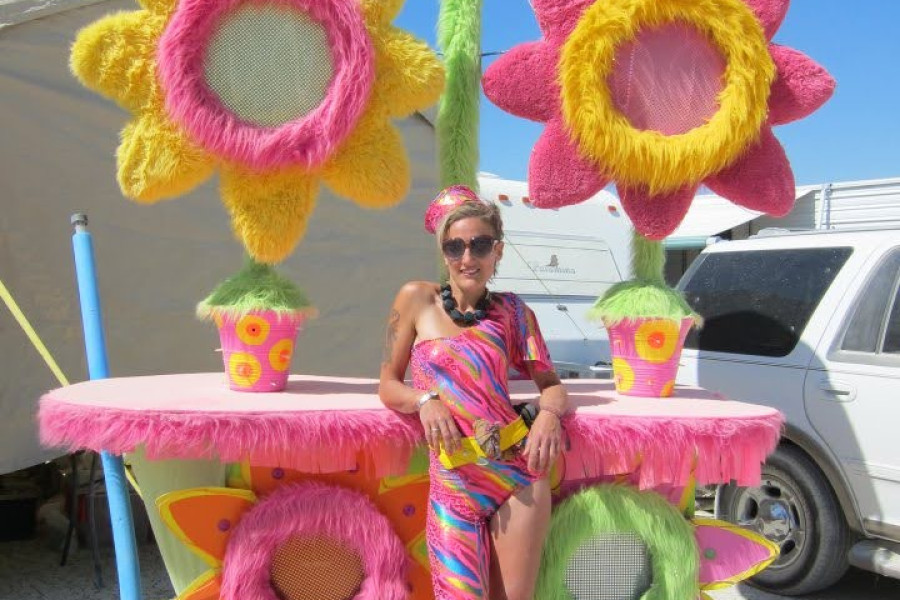
Bild: © Katcha B
Katcha B has been involved in the free party, clubbing and festival scene since the late 80s, first as a raver and then as a visual artist. She's not a DJ but has some old school records that she's gonna get on in public because you only live once.
Auftritt:
Zeit:
13:30
Location:
Mond DJ Pult
Lain Iwakura
a.k.a. DeRayling, Ezili-i Sabbah, Bill B. Wintermute, DiVersion

Bild: © Clara Wildberger
Lain Iwakura first appeared in Frankfurt am Main when background noise coalesced into a persona – a fragmented presence oscillating between lived history and recursive fiction.
She honed her sensibility at the Institute for Comparative Irrelevance, where she staged para-academic seminars in the repurposed former Institute of American Studies. Rumour has it that there, together with like-minded individuals, she founded the insittut de déstabilisaton and joined the Committee for the Abolition of the Arts, that secret office which connects something with nothing. At the same time, she studied musicology, sociology and philosophy at Goethe University and worked as a research assistant at the Max Planck Institute for Empirical Aesthetics.
Today, based in Graz, she works as a rhythm analyst, infrasound artist, author and chronosabotageur at the intersection of sound experimentation, critical theory and speculative practice, exploring the boundaries of perception, collective experience and structures of time. In her Master’s programme in Computer Music at the University of Music and Performing Arts Graz, she is focusing on “Social Noise”, a long-term research project on social compositions, power structures and collective vulnerability.
Combining mytho-science, sonic fiction and auto-theory, Lain Iwakura writes at the New Centre for Research and Practice on ‘inhuman-fictioning’, self-fictionalisation from the perspective of dehumanisation.
Auftritt:
Zeit:
00:00
Location:
Pre-Party Kombüse Graz
Lessie
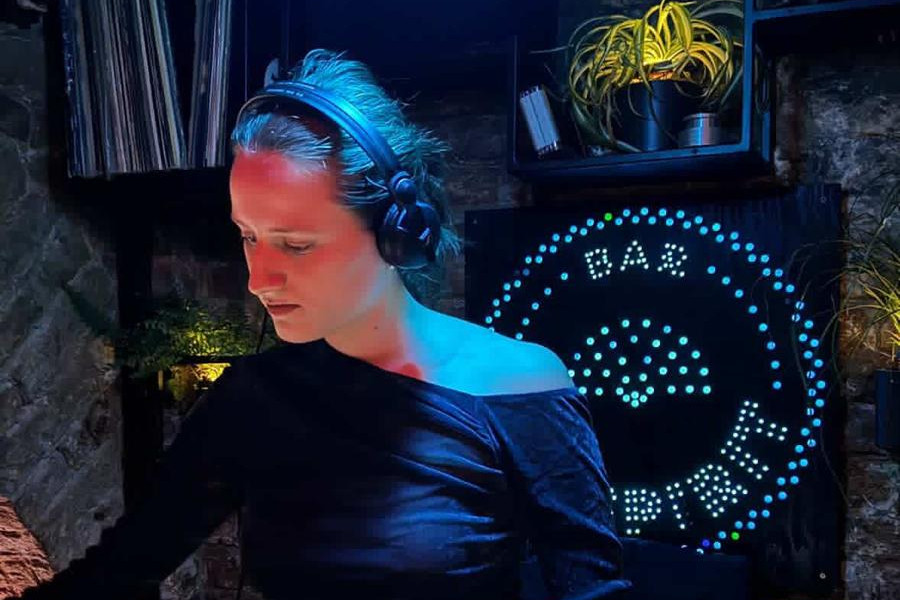
Bild: © privat
Lessie, originally from Bratislava and now based in Vienna, delivers energetic sets that move from elegant house beats to dynamic, fast-paced rhythms. Her sound weaves between house, progressive house, and deep grooves, bringing warmth and character to each of her diverse mixes.
Auftritt:
Zeit:
14:30
Location:
Mond DJ Pult
Nami
Retro soul meets future beats.
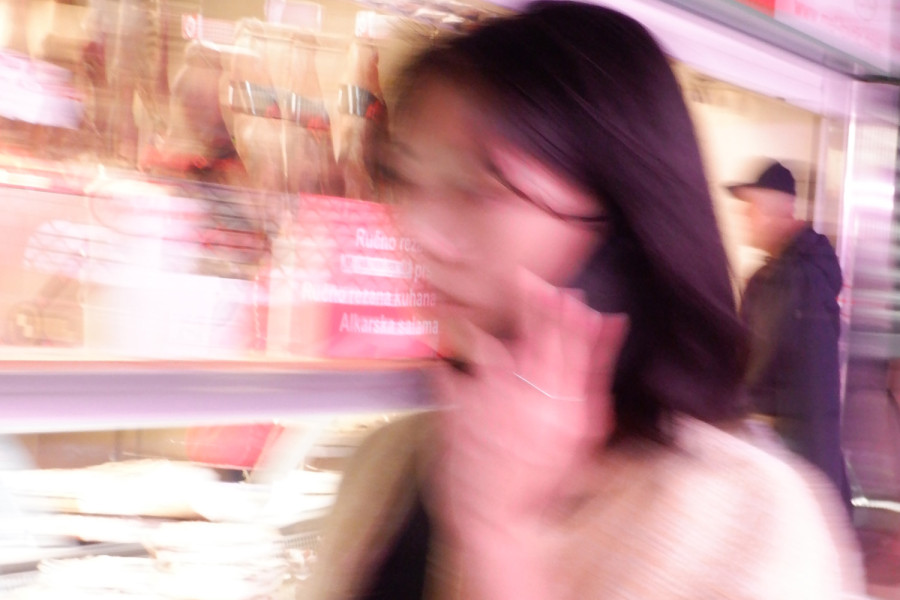
Bild: © Nina Tabuch
Retro soul meets future beats.
A seamless blend of city pop nostalgia and driving Japanese techno.
Auftritt:
Zeit:
14:00
Location:
Mond DJ Pult
Portia
Deep and floaty, psychedelic Spacerock
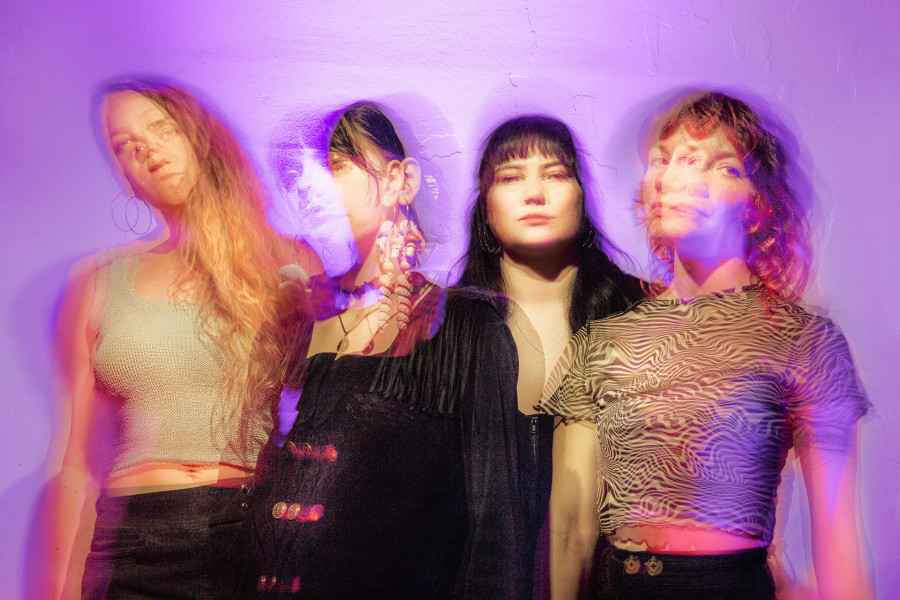
Bild: © Portia
PORTIA is a psychedelic rock band featuring sitar, guitar, bass, drums, and a range of effect pedals. Their roots lie in the jam culture of Vienna’s psych rock scene, from which this project has taken shape over the past three years. Since 2024, we have been playing on a variety of stages across Vienna, including Arena Wien, Otto Wagner Areal, Viper Room, and the Pop Chop Food Festival.
Their sound is versatile and ever-shifting. At its core is psychedelic rock — sometimes heavy, sometimes driving — woven together with playful, intricate melodies from guitar and sitar. PORTIA open the gates to a voyage where guitar and sitar blend into rhythmic drumming, and a bass that dives low and lands with a satisfying wallop. A dance of loops and layers spiraling into a smooth cosmic ocean. As the weight of the world melts away, each sound becomes a swirl in a vast sea of dreams, guiding you into otherworldly realms.

Auftritt:
Zeit:
20:00
Location:
Main Stage Indoors
Scheidenkleister
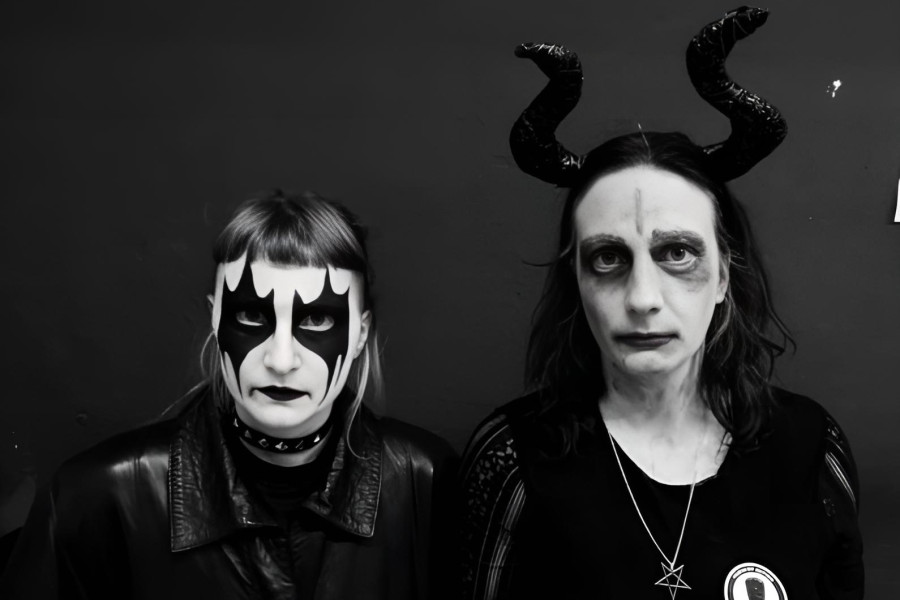
Bild: © Christian Steiner
Scheidenkleister is a music project founded in the shadow of Graz’s Schlossberg, which has been spewing out feminist black metal since 2017 and setting the ruins of patriarchy ablaze. Behind this radical, emancipatory collective stand Vulvarca (including Satan’s Violin, Screams) and Clitorax (including Death Organ) – two icons of their genre. With merciless organ blast beats, corpse paint and abysmal soundscapes, they smash misogynistic power structures to smithereens. Scheidenkleister believes not in salvation, but only in destruction as an act of liberation under the dominion of Satana. Bow down!
Auftritt:
Zeit:
18:15
Location:
Main Stage Indoors
Small Souki
live solo concert
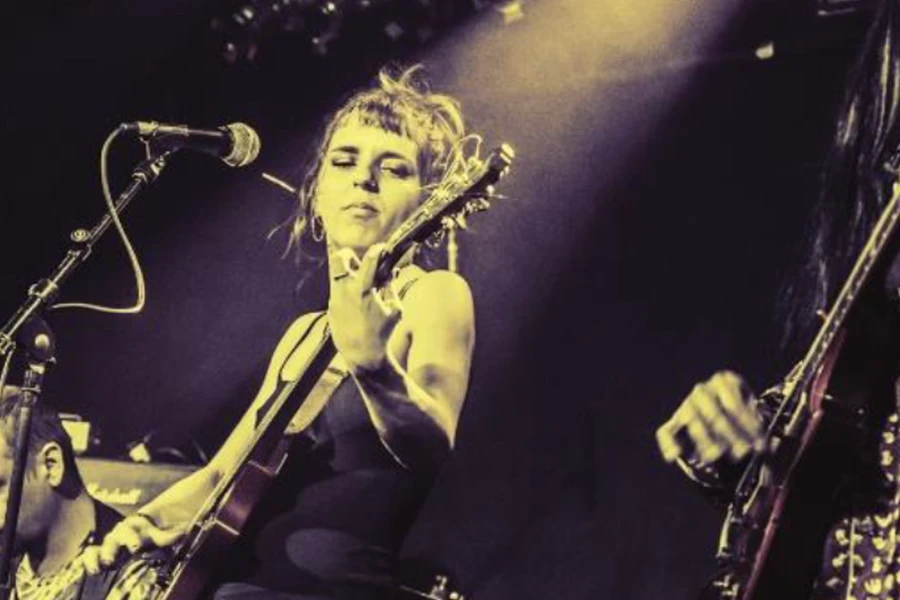
Bild: © smallsouki
Eleni Gaitani under the alias name Small Souki, is a musician, music-therapist and mathematician from Lamia, Greece, based in Vienna, Austria since 2015. She has worked basically in music and sound-art by collecting elements from variant genres like blues, jazz, alternative rock, psychedelic grunge rock, and progressive metal music as well as poetry and spoken-word to create familiar environments for her audiences to mutually exist and express their ideas and problematics, converging to a stable system. The projects and bands in which she participates, include the psychedelic grunge rock band, Small Souki & The Big Trouble Band, a 5-person collective that produces “heroine music for socio-political troubled subjects”, the band-project Manitari, an improvisational session with simulating effects, that on the grounds of a live performance includes the listener’s contributions with voice as main instrument as well as various materials for experimentation with sound-art. Furthermore, she has created sound-art pieces as a mix of digital music production and field recordings and led workshops in music therapy applying methods such as the Alexander technique and group improvisation with guidance to connect the individuals from different backgrounds (age, heritage, gender) of her unit.
Auftritt:
Zeit:
22:00
Location:
Pre-Party Kombüse Graz
Top_S
Grrrls DJ Crew Excellence
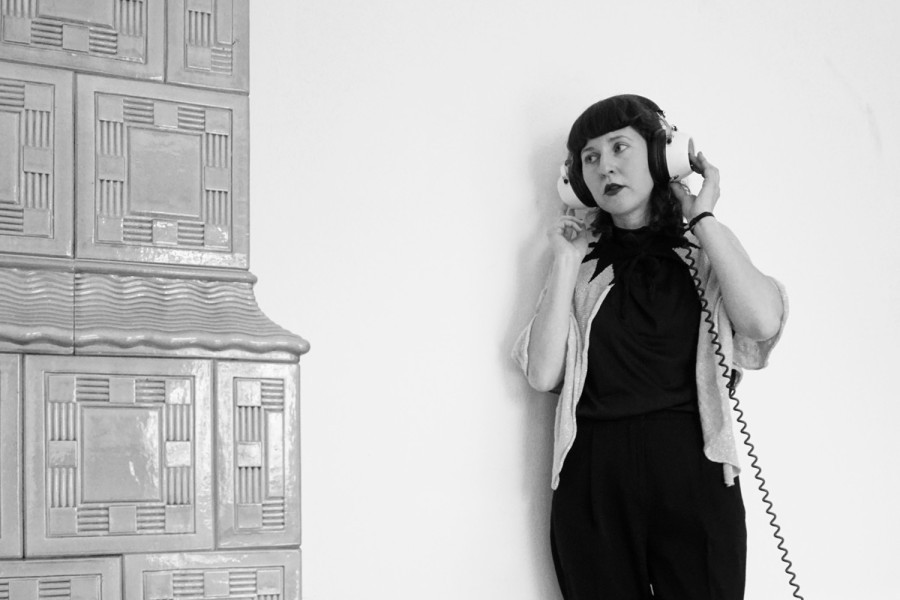
Bild: © Mario Reinisch
A mix of genres ranging from exhilarating dance music to atmospheric romantic longing. A soundtrack that challenges you to be in the right place at the right time.
Auftritt:
Zeit:
21:15
Location:
Pre-Party Kombüse Graz
Sarah Dawy
dreamlike
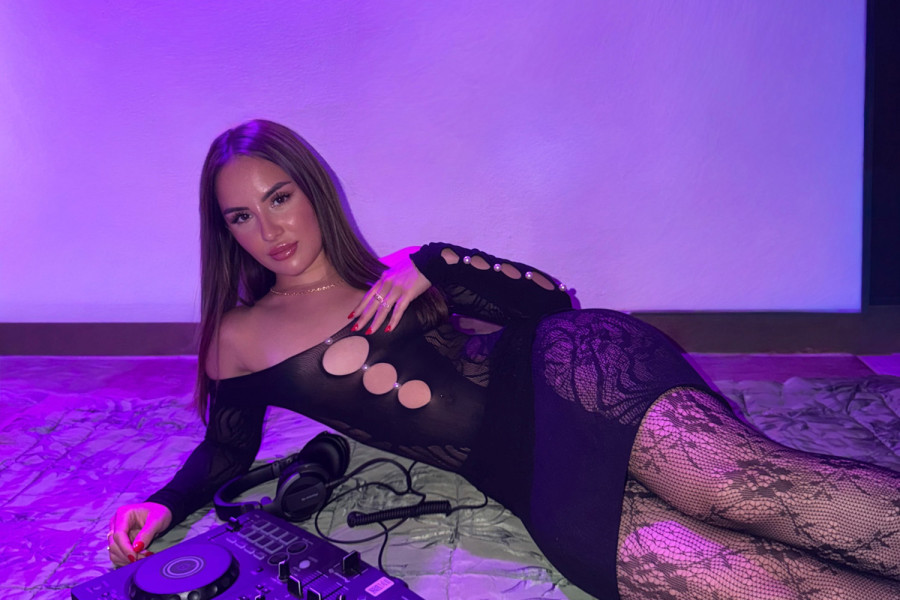
Bild: © Peachy
S æ r a h D æ wy 𐙚ྀི
Based in Graz.
Dark, groovy bass pulls you into a dream like state between reality and something deeper — hypnotic, weightless, addictive.
Not just a set.
More like a dream you fall into… and keep coming back to.
Auftritt:
Zeit:
01:30
Location:
Pre-Party Kombüse Graz
DISCOURSE
Sonja Eismann & Susanne Sackl-Sharif
in a conversation about sexism in the music industry
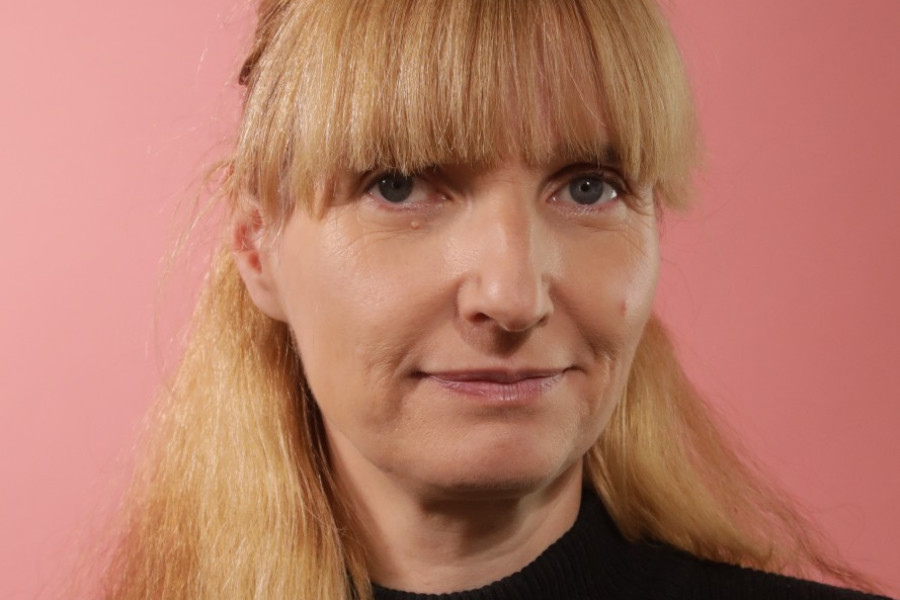
Bild: © Juliette Moarbes
SF26 EXPERT TALK
Sonja Eismann presents her book
CANDY GIRLS - SEXISMUS IN DER MUSIKINDUSTRIE
(Nautilus Flugschrift, 2025)
In a talk with Susanne Sackl-Sharif
Sonja Eismann (born 1973) is a journalist and cultural studies scholar. She studied comparative literature in Vienna, Mannheim, Dijon and Santa Cruz (USA) and was a co-founder of the magazine nylon and Missy Magazine, where she remains a member of the editorial team to this day. She has worked as an author and journalist for publications including Spex, taz, Freitag and Deutschlandfunk Kultur, and conducts research into gender representations in pop music. From 2016 to 2022, she was a member of the Goethe-Institut’s Music Council, and in 2024 she held the Pop Studies Chair at the University of Paderborn. She lives in Berlin.
Susanne Sackl-Sharif lives and works as a musicologist and sociologist in Graz and Vienna. Her research focuses in particular on popular culture, political participation, digitalisation processes and social inequalities. She wrote her doctoral thesis on gender aspects in metal music. She is the singer and violinist in the feminist black metal band Scheidenkleister.
Auftritt:
Zeit:
14:30
Location: t.b.a.
PERFORMANCE
Nina Chabek
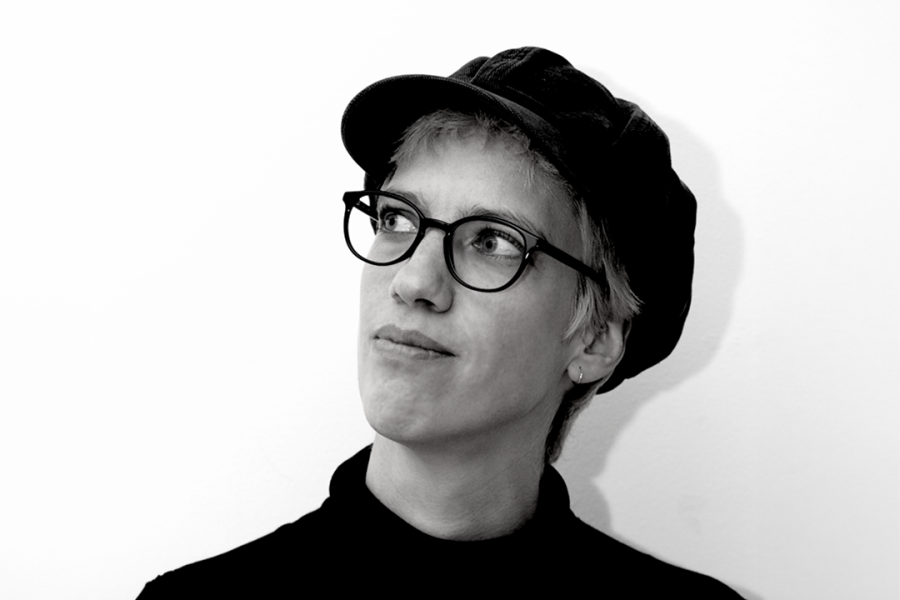
Bild: © Nina Chabek
In my visuals, I capture the sound, letting lines and shapes wander, intertwine and grow into an abstract visual composition. I immerse myself, connect with the music and take the crowd with me into my generative world.
Auftritt:
Zeit:
22:30
Location:
Pre-Party Kombüse Graz
Mahtab Miandehi
Interaktion mit der Musikmaschine
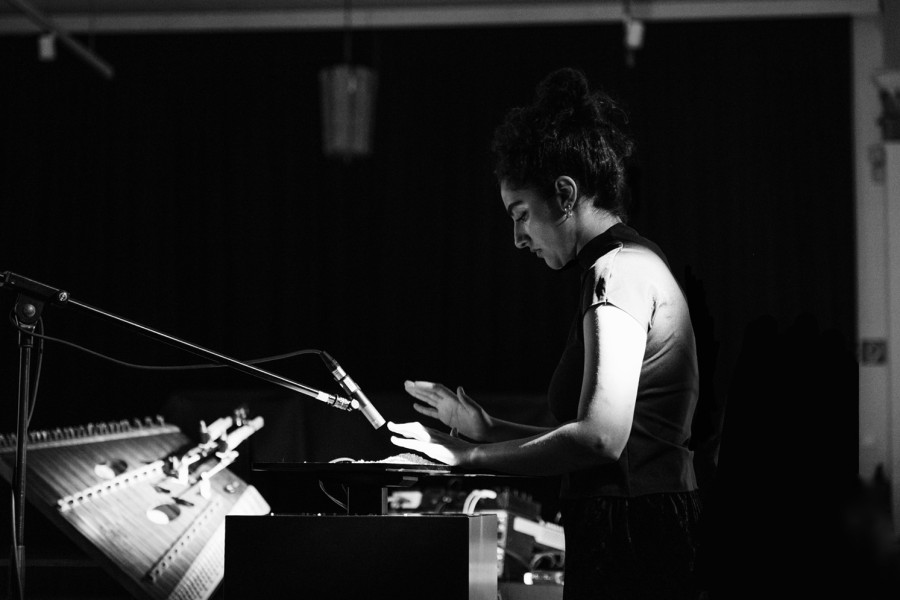
Bild: © Solane van Weele
Mahtab Miandehi is a sound artist and violinist whose practice focuses on the convergence of performer–computer interplay and gestural performance, grounded in improvisation and at times guided by a structured approach.
At SF26, she will perform with "Musikmaschine", an ongoing project developed through a series of performances, investigating hybrid instruments in conjunction with computationally driven system.
Two performances are scheduled for 14:00 and 16:15.
Auftritt:
Zeit:
14:00
Location:
Musikmaschine
WORKSHOP
Bildet Banden!
Wege zu einem solidarischen Miteinander.
In offener Runde wollen wir uns gemeinsam austauschen, wie wir einander und andere unterstützen und bestärken können. Dazu werden wir verschiedene Ansätze - von Donna Haraway's Cyborg Manifesto bis zu FRAUEN*streiken - betrachten und kollektives Wissen aufbauen. Der Fokus liegt aber nicht in der Theorie, sondern in der dadurch inspirierten Praxis. Es wird dazu Raum geben eigene Erfahrungen zu teilen, um so Gemeinsamkeiten zu finden und so zusammen aktiv zu werden.
presented by Friend of Grrrls QuFO
Auftritt:
Zeit:
14:45
Location:
FoG Workshops
Neurodivergentes Netzwerktreffen
Networking meetup for neurodivergent people!
Rina (she/they/none) is the founder of ACT AUT – Autismus Ausleben, an advocacy group and support centre run by and for autistic people, with a focus on queer and FLINTA individuals in Graz. The number of official diagnoses of autism and ADHD is currently on the rise. Thanks to greater public awareness and representation regarding neurodiversity, more and more people are realising that they, too, are on the neurodivergent spectrum. Nevertheless, white cis men, for example, are diagnosed with autism far more frequently than cis women or queer people. Due to outdated stereotypes and obsolete prejudices regarding autism/AD(H)D, many women and queer people only realise in adulthood why, despite their best efforts, they have never ‘fitted in’ to a world that is not geared towards their way of thinking. Despite growing demand for diagnoses of ADHD or autism, there are hardly any support services in Austria; indeed, services for neurodivergent people are usually overcrowded or aimed exclusively at children. As a result, a large number of adults who have been diagnosed late are often left to cope alone with the realisation that they are different, and find it difficult to access peer support or professional assistance. Above all, there is a lack of appropriate networking within the neurodivergent community and of self-advocacy groups that provide information from the perspective of those affected. ACT AUT aims to do just that.
presented by FoG ACT AUT!
Auftritt:
Zeit:
15:30
Location:
FoG Workshops
⚡️SPEED-SKETCHING⚡️
Mit Yue-Shin von The Cake Escape
In this workshop, we change both pose and model every 5 minutes – because the participants themselves become the subject! Through quick sketches, we capture immediate impressions of different people. The focus is on relaxed drawing rather than perfection: sketchy, simplified, or sometimes playfully exaggerated.
presented by Friend of Grrrls The Cake Escape
Auftritt:
Zeit:
13:00
Location:
FoG Workshops
Vogue Femme Crashcourse
by Kisme Moonlight 007
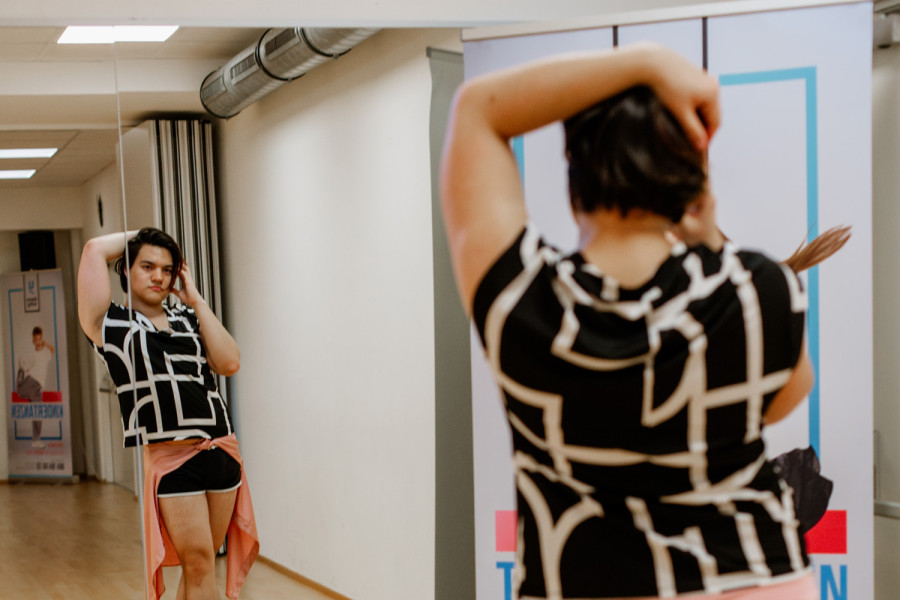
Bild: © Leonhard Schmidt
Vogue Femme Crash Kurs
Learn about a queer dance style in a playful manner – everyone welcome! Voguing originates in the Harlem Ballroom Community, an intersectional cultural space between POC and LGBTQIA+ identities. We'll explore the background of the dance, practice a few basic techniques and have lots of fun while getttint to know a new way of expressing ourselves. Get to know yourself from a new side and show off how cunty you truly can be. Confident, unapologetic feminitiy is what I want to see.
Kisme Moonlight 007
Kisme officially started his Ballroom journey in 2022. The next year, he already took part in international balls and started teaching his own Voguing class in Graz. His main categories are Vogue Femme, Arms Control, and Lip Sync. After spending half a year in Spain, he has returned to bring Ballroom back to Graz.
Auftritt:
Zeit:
15:30
Location:
Main Stage Outdoor
What is consent?
Workshop mit Queer my Pleasure
In this workshop, will be discussing the basics and learn how we can set and communicate our boundaries - in and outside of the bedroom, because consent is relevant for all social interactions!
We will have a joint brainstorming session, do some exercises and there will be space for personal reflection and exchanging what moves us during this process! ✨
presented by Queer My Pleasure
Auftritt:
Zeit:
21:00
Location: t.b.a.
INSTALLATION
Musikmaschine
Interactive music robot
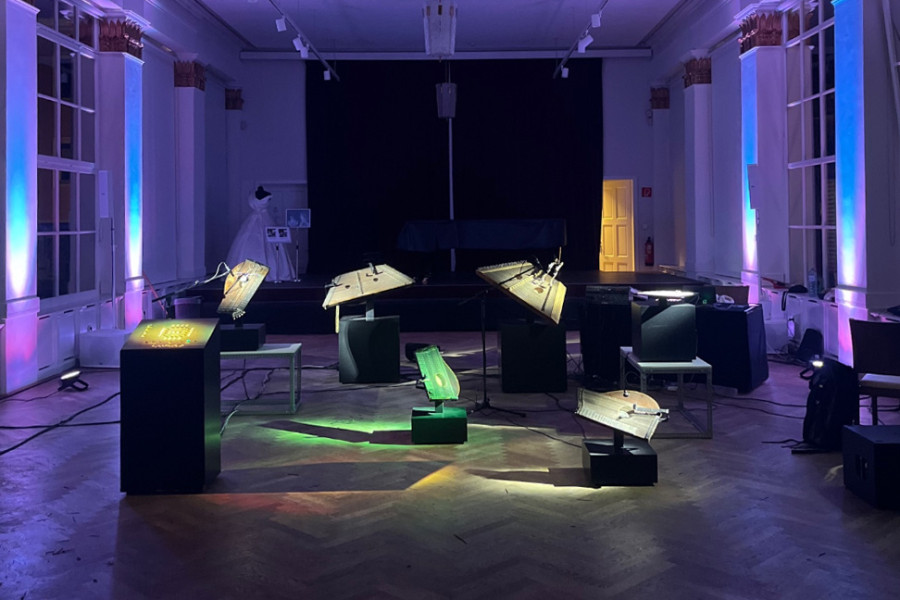
Bild: © Astrid Drechsler
This students project combines traditional instruments with contemporary electronic music and interaction. It was first developed for the Cultural Capital of Heritage 2024 in Austria. The sound characteristics of old instruments are paired with new styles of playing. It is an interactive installation where visitors can operate the Musikmaschine and create short electronic music compositions.
The Musikmaschine is a music robot that plays instruments using an intuitive user interface, similar to a drum machine. The machine was developed and built by students from FH JOANNEUM and the University of Music and Performing Arts Graz as part of the Master’s programme “Communication, Media, Sound and Interaction Design – Sound Design” – an inter-university collaboration between the Institute of Design and Communication at FH JOANNEUM and the Institute of Electronic Music and Acoustics (IEM) at KUG. This project was supervised by Astrid Drechsler and Daniel Fabry.
During the Sterrrn Festival there will also be a performance with the Machine by musician Mahtab Miandehi.
Auftritt:
Zeit:
13:00
Location: t.b.a.
TRYVOGA
Sound Installation by Nina Eba
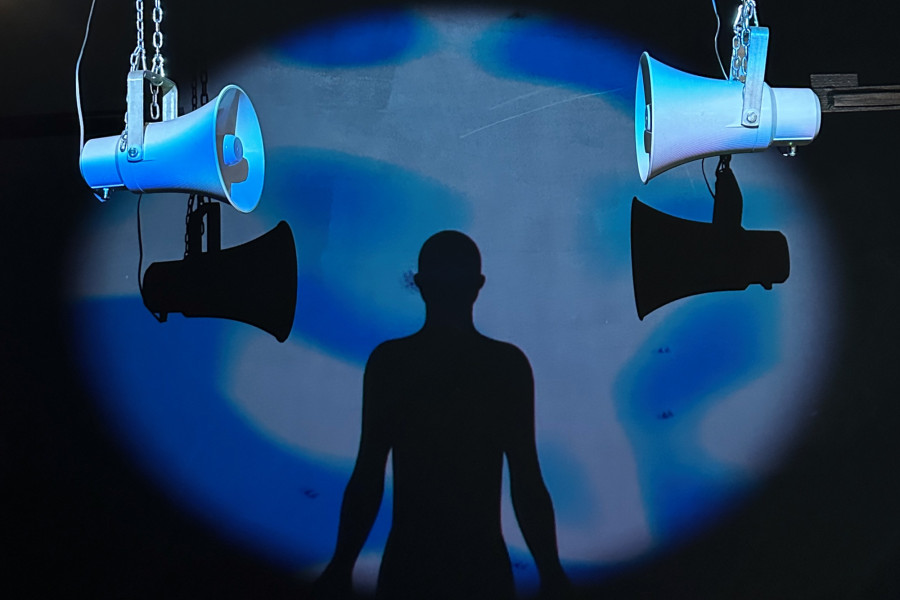
Bild: © Nina Eba
TRYVOGA (Nina Eba, 2026)
The title comes from the Ukrainian word “tryvoga”, which simultaneously means an internal state of anxiety and an external signal of danger — an alarm. This dual meaning reflects the core tension of the work: the gap between personal experience and a public sound.
TRYVOGA investigates how the body of a person with lived experience of war responds to auditory triggers that recall traumatic events, and how these responses can be expressed through sound. The heart is central to this project, as cardiac activity — particularly heart rate variability (HRV) — provides insight into stress regulation and the dynamics of the autonomic nervous system.
The project is based on the sonification of physiological data collected through weekly ECG recordings of my own body during civil defense siren tests in Graz. These data are transformed into MIDI control signals that shape both sound and visual processes, generating a continuously evolving audio-visual texture.
The work is grounded in the idea that the same sound can carry different meanings depending on experience. A siren that functions as a neutral public signal for most residents of Graz activates in me a distinct physiological response associated with anxiety and the anticipation of danger. Rather than reconstructing the event itself, the installation focuses on its embodied resonance.
NINA EBA is a Ukrainian composer, sound artist, and producer based in Graz. With over a decade of experience in electronic music and songwriting, her practice moves between music production, sound design, and audiovisual work. Alongside her work as an independent artist, she has worked across media, podcasts, and interactive installations, combining technical skills with a strong focus on sound as a narrative and emotional medium. She is currently studying Sound Design at FH JOANNEUM, where her recent work explores sonification and the use of her own body as a source of data for sound.
Auftritt:
Zeit:
13:00
Location:
Tryvoga